The molecular mechanisms of neurodegenerative diseases, early diagnosis and drug discovery
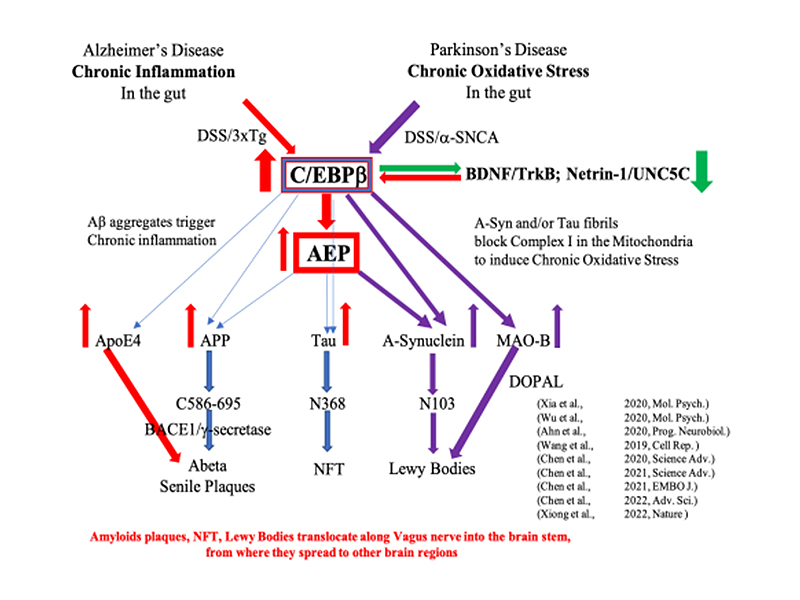
Ye lab discovered that C/EBPβ, an age-dependent transcription factor, serves as a master regulator of multiple core pathogenic genes implicated in Alzheimer’s disease (AD), including APP, Tau, and ApoE4. C/EBPβ mediates the transcriptional activation of δ-secretase (AEP), which proteolytically processes APP into fragments that potently amplify β-secretase activity, thereby exacerbating β-amyloid (Aβ) generation. Simultaneously, AEP-mediated proteolytic cleavage of Tau precipitates its pathological aggregation, fostering neurofibrillary tangle formation and unveiling a previously unrecognized axis in AD pathogenesis. In addition, AEP cleaves α-synuclein (α-Syn) at the N103 residue, yielding a highly aggregation-prone and neurotoxic α-Syn N103 fragment that drives dopaminergic neurodegeneration and motor deficits. Capitalizing on these mechanistic insights, Ye lab rationally developed a Single-Molecule Array (SiMoA) technology for ultrasensitive detection of AEP-generated proteolytic fragments in blood as early diagnostic biomarkers for AD and PD. Ye lab also designed CP#11A, a potent and selective small-molecule AEP inhibitor. Remarkably, CP#11A not only mitigates AD and PD pathology in preclinical models but also exhibits potential anti-aging properties, demonstrate tremendous clinical translational potential for addressing age-related neurodegenerative disorders.